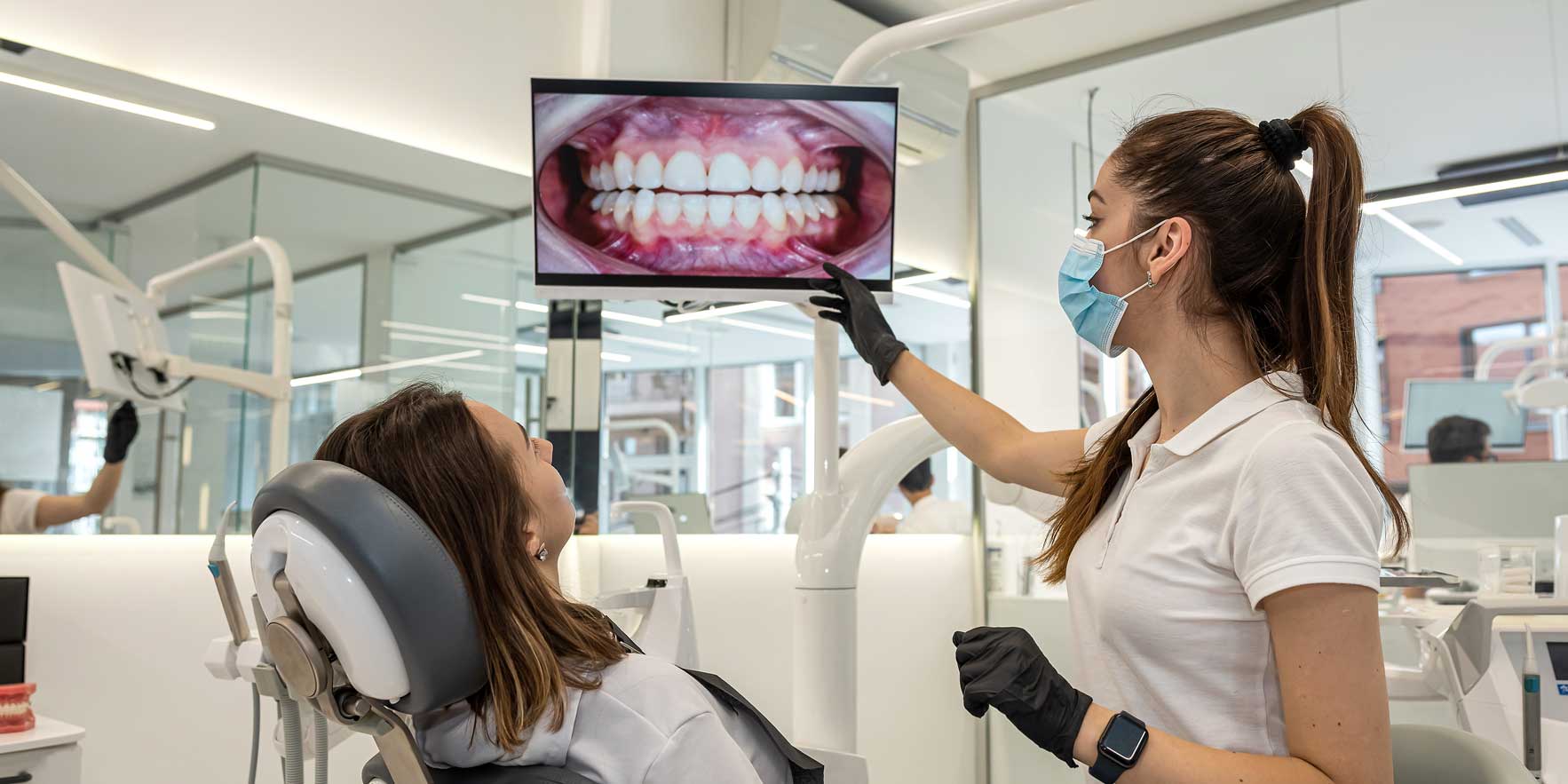
If your teeth look a little longer than they used to, or a notch of root has started to show near the gumline, you may be seeing gum recession.
It is very common, affecting nearly half of adults over 30 and the majority of seniors, and it tends to creep along slowly enough that many people do not notice until a tooth turns sensitive or simply looks different. The encouraging news is that recession can be stopped, and in many cases the lost tissue can be rebuilt. Here is what causes it and how a periodontist restores both the health and the appearance of your gumline.
What gum recession actually is
Recession is the gradual pulling back of gum tissue that exposes more of the tooth, including the root. *Key point: if the root is visible it means there also is bone loss which if left untreated can lead to tooth loss.
- It uncovers the root of the tooth, which is not protected by hard enamel
- Exposed roots are more prone to sensitivity and to decay
- Once gum tissue is lost, it does not grow back on its own
- Recession often signals thin tissue, inflammation, or mechanical trauma that needs attention
Why this matters to you: Exposed roots are softer and more vulnerable than the crown of the tooth. Addressing recession early protects against sensitivity, root cavities, and continued loss of the bone underneath.
Common causes of receding gums
Recession usually has a specific cause, and often more than one.
- Brushing too hard or with a stiff bristled brush, which wears tissue away over time
- Periodontal (gum) disease that destroys the tissue and bone around teeth
- Naturally thin or delicate gum tissue you may have inherited
- Teeth grinding and clenching, which place stress on the gumline
- Crowded or misaligned teeth, and habits such as tobacco use or lip and tongue piercings
Why this matters to you: Knowing the cause guides the fix. A brushing habit, a bite problem, and active gum disease each call for a different plan, and treating the true cause keeps recession from returning after it is corrected.
Signs it may be time for a graft
A periodontist can tell you for certain, but these are the changes that most often lead to treatment.
- Tooth sensitivity to hot, cold, or sweet that does not settle down
- Roots that are visibly exposed or notched near the gumline
- Recession that is clearly getting worse over months
- Thin, fragile gums or a high risk of root decay
- Longer looking teeth that affect the appearance of your smile
Why this matters to you: Recession rarely reverses on its own, and waiting usually means covering more root later. Catching it early makes treatment simpler and results more predictable.
How gum grafting restores the gumline
Gum grafting, also called soft tissue grafting, rebuilds the band of healthy gum around a tooth.
- A connective tissue graft, long considered the gold standard, places a small amount of tissue to cover the exposed root and thicken the gum
- The tissue often comes from the palate very near to the teeth or from the area where the wisdom tooth was located. It also can come from a donor or tissue substitute when that is a better fit.
- Minimally invasive, tunneling techniques such as VISTA can treat several teeth through tiny openings, often with less discomfort and faster healing
- Modern root coverage grafting is highly predictable, with strong long term success when the underlying cause is addressed
Why this matters to you: A graft does more than cover a root. It rebuilds a thick, durable band of gum that resists future recession, calms sensitivity, guards against decay, and blends naturally with your smile.
What to expect and how to heal well
Most patients are pleasantly surprised by how manageable grafting is.
- Many grafts are completed in a single visit with local anesthesia and optional sedation
- Expect mild soreness and swelling for a few days, easily managed with simple measures
- Favor soft, cool foods and avoid brushing directly on the site until it heals
- Follow your periodontist’s home care plan and keep your follow up visits
Why this matters to you: Gentle care in the first two weeks protects the new tissue while it attaches, which is what turns a good surgical result into a lasting one.
How a periodontist helps you succeed
- Measure recession precisely and pinpoint why it is happening
- Determine if and how your medical health is causing or increasing your gum problems. If needed, your medical doctor(s) will be consulted to determine the best course of individualized treatment.
- Select the grafting technique best suited to your tissue, including minimally invasive options
- Treat any active gum disease first so the results last
- Correct contributing factors, from brushing technique to a custom nightguard for clenching
- Set a maintenance interval that matches your biology and risk level
The Bonacci difference
Here in our local area, Dr. Fred Bonacci brings a rare combination of advanced training to your care. With a national and International office viewpoint, you will have the same diagnostic and treatment options available to you locally as if you were being treated in an office anywhere throughout the country or internationally. He is board certified by the American Board of Periodontology, is a Fellow of the International Team for Implantology, and is trained in minimally invasive techniques such as VISTA or SMART, and uses Perioscopy technology to non-surgically diagnose and/or remove infection below the gumline. He also maintains membership in the International Society of Periodontal Plastic Surgery.
Why this matters to you: Root coverage and gum grafting are periodontal plastic surgery, where experience and technique make a real difference in comfort, healing, and how natural the result looks. You receive specialty level care with a full menu of options chosen for your specific gums.
Your next step
If your teeth look longer than they used to, feel sensitive at the gumline, or you simply do not like how your gums look, schedule a comprehensive periodontal evaluation. You will leave with a clear picture of your gum health and a simple plan to protect and, where needed, restore your gumline.
This blog is for educational purposes and does not replace personalized diagnosis or treatment. If you have gum concerns, please consult a periodontist.